EssayAugust 5, 2026
The Half-Finished Miracle
Keralam is one of the few places in India where everyday expectations of life feel closer to parts of Europe than to much of the subcontinent. People expect literacy to be normal. They expect public argument, not deference. They expect some baseline of dignity in work, public services, and social life. They do not always get these things. But the expectation exists. That matters. I grew up in Kerala. I have lived and worked in France, Singapore and Switzerland. That combination makes certain things hard to unsee.
It matters because development is not only about income. It is also about what a society comes to regard as ordinary.
In Keralam, the sequence mattered as much as the substance. Education and political organising came first: princely-state schooling, missionary networks, and a reading public that argued in print were in place by the early twentieth century. Land reform under the 1957 and 1969 governments broke the landlords who had lived off farm rents and spread a surplus that elsewhere in India stayed at the top. Unions and parties then won higher pay and better services from a state that was not yet industrialising. Large-scale Gulf migration began after the oil price rise of 1973-74. The money sent home sustained household incomes and spending, while the state paid for its social spending mainly by borrowing, so a productive base at home did not have to pay for either.1,5,11 Decentralisation in the 1990s moved welfare delivery into local bodies. The result is a population that behaves less like a labour reserve and more like citizens who expect a say.
Set income aside and Keralam has long looked exceptional within India, with literacy, life expectancy and health outcomes at the top of the national table.3,4
But that is only half the story. The other half is that Keralam never fully built the productive base, research depth, or employment structure that usually underwrites such social outcomes.1,7 The state succeeded in creating a more civilised society faster than it succeeded in creating a deeply productive economy. That is the paradox. It is also the policy problem.
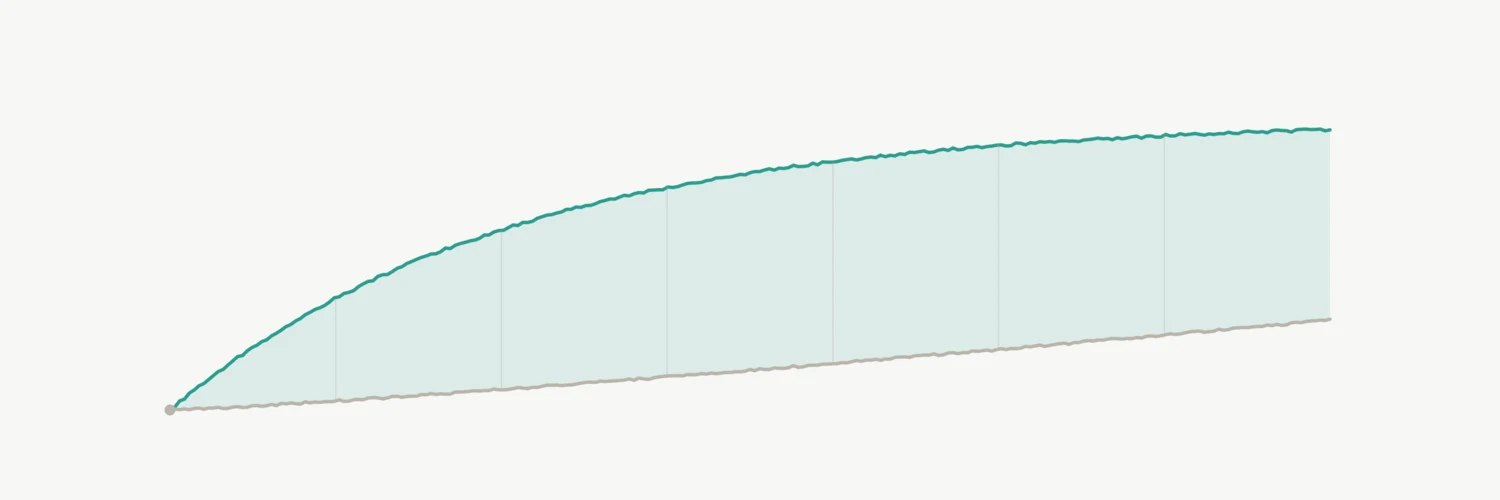
Most Indian development arguments are still structured around a model Keralam does not fit. They assume that prosperity comes first, welfare later; that human beings can be sorted into cheap labour pools and moved into factories or service centres; that public services can wait until after growth; that labour should stay quiet while capital compounds. Keralam disrupted that sequence. It proved that social development can run ahead of income.4
That was a historic achievement. It also created a trap.
A state that has taught its citizens to read, mobilise, demand, and compare cannot indefinitely run on remittances, welfare expansion, public employment, and generic services alone.2,5 A society that has produced European-style expectations on parts of health, education, and citizenship cannot easily revert to the low-wage, low-voice development bargains that remain common elsewhere in India. Keralam has, in effect, socialised its population into a more advanced model of life than its economy is capable of sustaining on its own.
What makes this a trap and not just a mismatch is that several of the mechanisms holding it in place actively resist their own dismantling. Committed expenditure on salaries, pensions, and interest already absorbs about three-quarters of the state’s revenue receipts, which leaves little room for new productive investment without either fresh borrowing or a politically costly retrenchment. That ceiling, and what is still worth imagining underneath it, is the subject of an earlier essay on the 2026 Fiscal Status Report.2 Public-sector employment has long served as the consolation prize for educated unemployment, which both major political fronts have an electoral incentive to protect rather than reform. And out-migration has eased unemployment at home: by the late 1990s, the Centre for Development Studies’ migration survey found it had cut the number of unemployed Keralites by 32 per cent.12 In doing so it quietly relieved the domestic pressure that might otherwise have forced structural change.
This is why Keralam so often feels like a place suspended between two levels of development. On one side sits the everyday evidence of social achievement: literacy, political consciousness, public debate, strong health indicators, and a social fabric in which pluralism is ordinary rather than aspirational.3,4 On the other sits the evidence of incompletion: educated unemployment, out-migration, a service-heavy economy, weak industrial depth, shallow research intensity, and a state budget under persistent stress.2,6,7
The clock on this structural transformation is tighter than it might appear. Keralam’s total fertility rate has fallen to 1.5 (below replacement), and its share of population aged sixty and above is already the highest among Indian states, at 16.5% for 2021 in the UNFPA India Ageing Report 2023 projections that the state’s Economic Review cites.1,10 By 2030, roughly 35 Keralites over sixty will exist for every 100 working-age ones. For India as a whole, the dependency ratio starts to rise in the 2040s, and the old-age ratio is projected to reach 30 per 100 working-age people only by 2050.10 Keralam is running that experiment now, without having yet built the productive economy that would make it manageable.
The usual ways of describing Keralam miss this tension. Admirers turn it into a morality play about welfare and equality. Critics reduce it to a cautionary tale about unions, rigid labour, and fiscal weakness. Both are too simple. Keralam is neither a finished success nor a failed model. It is a half-finished one, and that is a description of sequence rather than an insult: the state built social capability faster than economic depth, and taught its citizens to expect dignity before building an economy that could make dignity materially easy.
That mismatch now defines almost every serious question Keralam faces.
Why is educated unemployment so high in a highly literate state? Because education is not the same as employability, and employability is not the same as a matching local economic structure.6 Many Keralam graduates leave university with a degree and without the apprenticeship, applied technical practice, or industry-specific exposure that converts a degree into a hireable signal. Even those who do are not finding firms in Keralam calibrated to use them, because the links between research and industry remain weak. Why does so much ambition still leave the state? Because talent follows dense opportunities, serious firms, research ecosystems, and global networks, not just school completion rates.7,9 Why does generic capital often treat Keralam as difficult? Because a population with strong expectations of labour voice, social protection, and environmental restraint is difficult for capital calibrated to low-cost, low-voice environments.
This is also why Keralam cannot simply copy the developmental scripts that worked, or appeared to work, elsewhere in India. It cannot become a giant-factory state without tearing through land, ecology, and local political resistance. It cannot compete forever as a labour-arbitrage services economy because educated people do not want to remain permanently trapped in low-value execution roles, and because generic services rarely create deep local capability or sticky value capture. And it cannot rely indefinitely on migration and remittances to solve structural weaknesses at home.1 Each of the standard Indian developmental templates (Bengaluru’s services boom, Gujarat’s manufacturing scale, Tamil Nadu’s industrial corridor) was built on a population profile, fiscal architecture, and political economy that Keralam simply does not have.
The future therefore has to begin from a more honest premise: Keralam is not a place waiting to industrialise in the standard Indian way. It is a place that has already become too socially advanced for that script, without yet discovering its replacement.
That is why the comparisons that matter are not only with Bengaluru, Gujarat, or Tamil Nadu. They are also with smaller, high-skill, high-cost places I have watched turn institutional quality, research depth, and human capital into durable economic advantage.9 Singapore and Switzerland are not templates for Keralam. But they are useful provocations. They show that small places with expensive labour, limited land, and strong social expectations do not have to become irrelevant. They can become precise: world-scale in two or three domains, and merely competent in the rest.
Precision is exactly what Keralam has lacked in its economic imagination. Precision in this sense is the discipline of choosing a small number of high-stakes sectors, building deep institutional capacity inside each (research labs, training pipelines, public procurement, patient capital), and letting that depth compound. Picture a compact biopharma corridor stitched to a university hospital and its laboratories, or an animation, gaming, and visual-effects cluster anchored in Kochi and built for owned IP and export rather than back-office volume. It is the opposite of the investment-summit approach, where ambition is announced in many directions and absorbed in almost none. Much of its policy debate remains trapped between two inadequate instincts. One is defensive romanticism: the belief that Keralam’s social model is already enough, and that growth will somehow emerge from more of the same. The other is imported impatience: the belief that Keralam should become more “investor friendly” in the generic Indian sense, which usually means industrial parks without depth, quick MoUs without follow-through, and labour rollback without capability building. Neither is serious.
The first ignores the fact that the current model no longer produces enough productive depth. The second ignores the fact that Keralam’s social achievements are not decorative but constitutive. They are not a burden to be shed. They are the state’s deepest asset.4,5 The real question is how to turn that asset into a different kind of economy.
That economy will not be built on scale in the old sense. Keralam does not have the land, ecology, or political structure for giant low-cost industrial sprawl. Its path is more likely to run through compact, knowledge-intensive, research-linked, globally connected sectors that can thrive in a high-HDI, high-expectation society.8 That shift sounds abstract until it is made concrete. It means moving from degrees to employability, from publication counts to deep labs, from generic investors to long-horizon builders, and from labour export to capability creation.8,9 An Elsevier report released through KSHEC found that publications by the state’s universities grew 11% a year between 2018 and 2023, while academic-corporate collaboration stood at 0.6%, which is precisely the gap that distinguishes a research-active state from a research-driven economy.7
It also means accepting something politically uncomfortable. Keralam’s next development phase cannot be won mainly through rhetoric, cultural self-congratulation, or partisan rotation. The state is entering a stage where institutional depth matters more than narrative fluency. It needs better research systems, more serious firms, more precise talent pipelines, and a public sector able to act as a competent partner rather than a slow-moving commentator.7
If that sounds less romantic than old stories about the Kerala model, that is because it is. But it is also more useful. The achievements of the last century were real. They gave Keralam a population with unusual capabilities, expectations, and social instincts. The challenge now is to build an economy worthy of them.
That is the half-finished miracle. Keralam already built the society. It still has to build the economic form that fits it.
The rest of this series approaches that question from a sequence of lenses (labour, industry, the networks that already carry knowledge, research, capital, the ecological estate, the city, the future firm) and will keep adding more as the work progresses. It is partly a public dossier on Keralam. It is also an attempt to think clearly about the future of a place I know, by walking around it from one angle after another. The next essay begins with the most immediate manifestation of the mismatch: a state that succeeded brilliantly at education, and then discovered that literacy is not the same thing as employability.6
Sources
2. PRS Legislative Research, “Kerala Budget Analysis 2025–26”; see also Kerala Legislature, “Medium Term Fiscal Policy” (15th KLA, 16th Session).
4. Wikipedia, “Kerala model” (welfare-led development, social gains, non-income HDI); see also overview paper, Entri (PDF).
5. Aswathy Rachel Varughese, Kiran Kumar Kakarlapudi & Sumalatha B S, “Kerala’s Development Paradigm: Are there any blind spots?”, Kerala Economy 5(1) (2024): 75–97, Gulati Institute of Finance and Taxation; see also A. Rose, “Kerala’s Development Paradox,” University of Oxford South Asian Studies (2014).
6. Times of India, “Kerala among the top in India’s youth unemployment chart despite high literacy”; see also CPPR, “The problem of educated unemployment in Kerala” and IJCRT paper on educated unemployment in Kerala (PDF).
8. Economic Times Manufacturing, “Kerala govt focusing on knowledge-based industries to boost jobs and investment”; see also The Week / PTI, on Kerala industrial policy and knowledge-based sectors.
9. Capiwell, “Singapore and Switzerland: Two Innovation Leaders”; see also ETH Zurich, “Mobilizing Swiss Research in Asia”.
10. Kerala demographic transition data: Registrar General of India, Sample Registration System (SRS) Statistical Report 2021 (Kerala total fertility rate at 1.5, below the 2.1 replacement level); Al Jazeera, “As India becomes the most populous nation, Kerala ages” (17 April 2023), reporting a 16.5% share aged sixty and above and, on the Kerala government’s figures, roughly 35 people over sixty for every 100 of working age by 2030; Nisha Holla, “India Could Age Before It Becomes Rich: From Demographic Dividend to Productivity Dividend,” Observer Research Foundation Issue Brief, which provides the framing that India could age before it becomes rich.
11. Philippe Venier, “From Kerala to the UAE: Emerging trends in a mature labour migration system” (2007), HAL working paper halshs-00324540: Gulf links from the oil drilling of the 1930s and late 1940s; “The first migration wave started just after the oil price hike of 1973-1974.”
12. K.C. Zachariah, E.T. Mathew and S. Irudaya Rajan, “Socio-Economic and Demographic Consequences of Migration in Kerala”, Centre for Development Studies Working Paper 303 (May 2000), pp. 33–34: “Migration has considerably eased the unemployment problem in the state. As a result of migration, the number unemployed has declined by 32 percent and the unemployment rate has declined by about 3 percentage points.”
Share feedback
No public comments. If you want to share a reaction or correction, send it here.